Keynote Speakers
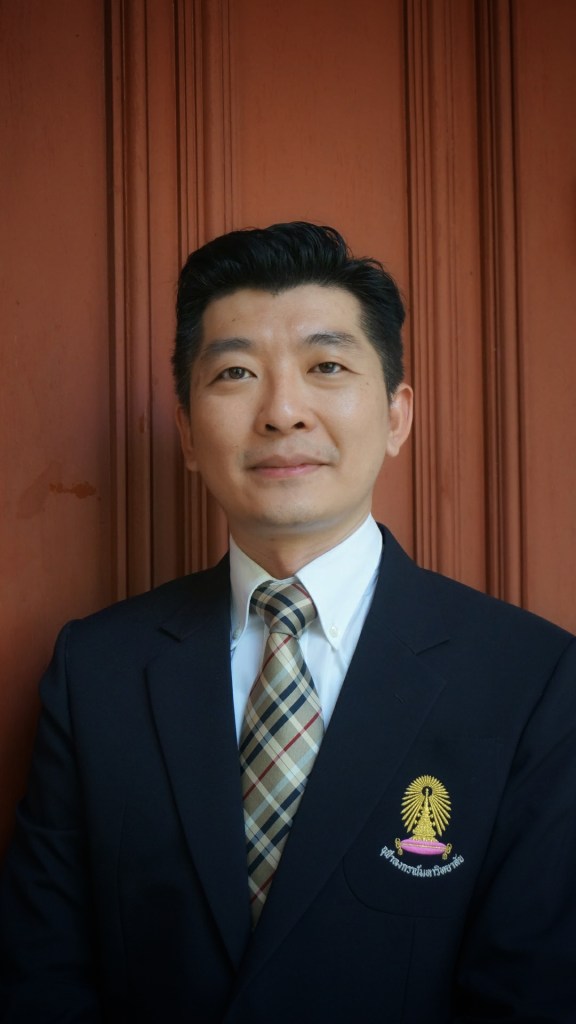
SURADECH CHOTIUDOMPANT
Chulalongkorn University, Thailand
Currently appointed as Dean of the Faculty of Arts at Chulalongkorn University, Suradech Chotiudompant is an Associate Professor in the Department of Comparative Literature. He has published extensively on world literature and contemporary Thai literature, in addition to authoring a monograph on Gabriel García Márquez and a textbook on literary theory.
Unveiling Asian Undead: Unraveling Ideological Encounters in Korean Zombie Narratives
Over the course of recent decades, it is undeniable that zombies have captured the collective imagination, as evidenced by the proliferation of zombie-centric films and television dramas. Spanning from Victor Halperin’s White Zombie (1932) to George A. Romero’s Night of the Living Dead (1968) and Danny Boyle’s 28 Days Later (2002), among countless others, these works not only reflect society’s fascination with zombies but also the underlying anxiety associated with the visceral nature of this genre.
In Western discourse, discussions surrounding zombies often gravitate towards themes of consumerism and individualism. Portrayed as soulless beings driven solely by primal urges, devoid of moral compass, zombies serve as a symbol of societal decay. Moreover, as the fear of viral outbreaks has gained prominence in recent years, zombies have come to embody the terrifying concept of infectious contagion.
The rise of Asian television dramas in the new millennium has also seen the infiltration of zombies into Korean cinema and television. From acclaimed films like Train to Busan (2016) to Alive (2020), and television series such as Kingdom (2019) and All of Us Are Dead (2022), the adaptation of zombies across regions brings forth fresh narratives and ideological connotations, particularly within the context of Korean modernity. Here, the portrayal of zombies takes on new significance, intertwined with local dynamics of ambivalent fascination with the West and the clash between traditional and contemporary lifestyles. This ideological fusion renders Korean productions of zombie narratives both eerie and distinctly original.

SHIN-DONG KIM
Hallym University, Korea
Shin Dong Kim is a professor at the Media School and the director of the Institute for Convergence Culture, Hallym University, Korea. He is elected as the president of the Korean Association for Public Diplomacy for 2025. Dr. Kim is the Editor-in-Chief of the Korean Social Science Journal which is the flagship academic journal of the Korean Social Science Council. KSSC is an association of fifteen national academic associations in social sciences and management studies. Throughout his professional career, Dr. Kim has been an active advocate and innovator for the globalization of higher education. His area of research and teaching covers culture and creative industries, media policy and political economy, global communications, and film studies. He has recently managed a five-year national research project on modeling the Korea’s ICT developments. He is currently working on the impact of narratives and narration in human communication. Dr. Kim has been invited to teach at many universities globally including Dartmouth College, Sciences Po Paris, Peking University, Chinese University of Hong Kong, University of the Philippines, Shanghai University, etc. Dr. Kim earned his PhD from Indiana University in Mass Communications, and M.A. and B.A. from Korea University.
Homo Narrator: Living in the Prison of Narratives
Would we ever be able to live in a world without war and violence? A recently released Hollywood blockbuster Dune Part2 is all about a war among humanlike creatures in the year of 10919. According to the movie’s imagination, humans will still be killing each other for the next eight thousands years. Why we humans have not been successful in stopping the war yet? What’s keep making us to be captured in such stupidity and brutality? Why we keep imagining the fate of humans in everlasting struggle? Throughout the history of humanoid, people have made lots of meaningful changes. This talk proposes human beings are destined to live in the narratives that they have created, and changes of any kind can only follow when the narratives change first. We are currently dwelling in the highly developed web of narratives which guides, controls, limits, punishes, rewards us. The power of narratives are omnipresent and profound. Yet its none other than humans themselves who created narratives on their fates. In the time of rising global television, the ways we are engaging in narrative production and consumption are moving toward a new scene. What narratives are liberating and empowering humans and what are imprisoning them?

THOMAS BAUDINETTE
Macquarie University, Australia
Thomas Baudinette is Senior Lecturer in Japanese Studies and International Studies at Macquarie University. A cultural anthropologist, his research primarily explores how popular media and fandom culture inform knowledge about gender and sexuality across East and Southeast Asia. He is the author of Regimes of Desire: Young Gay Men, Media, and Masculinity in Tokyo (University of Michigan Press, 2021) and Boys Love Media in Thailand: Celebrity, Fans, and Transnational Asian Queer Popular Culture (Bloomsbury, 2023). He is currently working on his third book, tentatively titled Queer Fantasies of Asia: Japanese and Korean Media Fandom in the Philippines.
Thai BL Series, Philippine Fandom, And Queer Affective Entanglements Across Southeast Asia
(forthcoming)
Back to Home
 Asian TV Dramas and the Popular Mind in Southeast Asia